




Common Problems with Paint & Stain
Alkyd Paints
Weaknesses
One of the weaknesses of alkyd paints is the tendency to yellow with age. Yellowing is accelerated in the absence of light (e.g. behind pictures) or if the dry paint is exposed to fumes from ammonia or the amines in epoxy paints. On new construction, damage to surfaces painted with alkyd paints can be caused by fumes during the application of epoxy flooring products, or from ammonia in cleaning products. If yellowing occurs, repainting is necessary.
Wrinkling
Alkyd paints that contain substantial amounts of linseed oil (some house paints and tank enamels) are prone to wrinkling when used at low temperatures. These products require 48 hours dry time at 77ºF (25ºC) before recoating. If these products are topcoated before they have dried sufficiently, wrinkling will occur. If the surface is cold and the humidity is high, dry time is affected. A fast-drying topcoat applied over an undried or soft primer will also wrinkle.
Blistering and Flaking
Cause
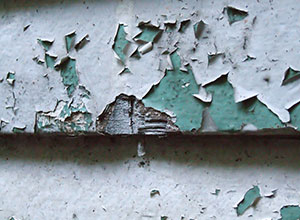
Flaking is likely to be caused by poorly adhering, powdery old coatings. Check for the presence of powdery coating by rubbing your hand over the surface - powder on your hand indicates a problem. This may be due to any of the following factors:
- Moisture trapped beneath the surface of the paint film.
- If the paint is applied over a powdery or friable surface.
- Surface contamination such as dirt, oil, and grease.
- Polish residues on the surface, which impair the adhesion of the paint.
- Excessive movement of the substrate, such as joints, imposing stress on the paint film which can result in cracking which in turn lets in moisture, ultimately resulting in a flaking paint film.
- Resins present in knots causing light coloured paints to discolour or even flake. Resin bleed and flaking is a common problem where dark colours are used on south facing elevations. This is because dark colours absorb more heat than light colours.
Putting it right
Scrape off any loose flaking and poorly adhering coating, and wash off the powdery material with clean water. The surface should then be suitable for painting when dry. If the plaster is exposed in areas, prime these areas first and then follow with your choice of top coat.
Cracking of Plaster
Cause
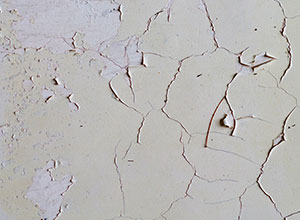
This is a common occurrence in new houses and is often the result of plaster drying out or movement of the building.
Putting it right
Cracks should be cut out and all dust and debris removed. The cracks should then be filled using appropriate filler. This area can then be primed and painted with your chosen finish.
Cissing (Cratering)

Cause
This is caused by painting over contaminated surfaces such as wax, oil or polish. The paint cannot adhere to the surface and draws away leaving unpainted areas.
Putting it right
Allow the surface to dry and then rub down using 'wet and dry' abrasive paper and a solution of warm water and detergent. Once rinsed and dried the area can be repainted.
Curing/Sealing
Latex Vs. Alkyd Paint
It can take considerable time for a latex or alkyd paint to fully cure after application. Most latex paints are dry to touch after one hour and dry to recoat after four hours, but it can take up to three weeks for all of the solvent film-forming additives to come out of the product. Maximum water resistance is not achieved until the solvent has evaporated. Alkyd paints continue to cure after they have dried (16 hours). Maximum hardness and abrasion resistance for an alkyd paint usually takes 3-4 weeks.
Alkyd Paint
Alkyd paint has very poor alkali resistance. The alkalinity of a damp concrete surface can be quite high. Alkali attacks the resin system in an alkyd and makes it soft and sticky (saponification), resulting in poor adhesion. This situation is most likely to occur on concrete floors where there is an occasional moisture problem in the concrete. If an alkyd is saponified, it must be removed before the surface can be recoated.
Alkyd Sanding Sealers
Alkyd sanding sealers are clear coatings that are easy to sand. When solvent comes in contact with wood, it causes the grain of the wood to raise, making sanding necessary. Sanding sealers are recommended for use as a first coat on new wood or over wood stains. The materials in sanding sealers that make sanding easy can interact with polyurethane over time, forming a slick hard finish, causing peeling of the polyurethane from the sealer. Sanding sealers should only be used under alkyd varnishes.
Dilemmas
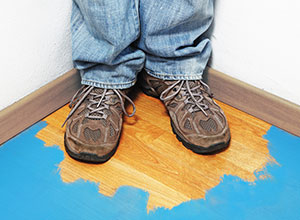
Appearance Or Performance?
Because of the desire to hide the imperfections in drywall tape joints, it has become common practice to use flat, satin, or eggshell paints on these surfaces. The lower the sheen, the less these imperfections are visible. The difficulty is that the lower the sheen, the more prone to burnishing the dry film becomes. In most low-sheen products, the pigment is exposed through the resin in the dry paint because of the high pigment / resin ratios. Shiny areas (burnishing) develop when the exposed pigment is abraded, usually during washing or wiping. Once burnishing has occurred, the surface has to be repainted to eliminate the blemishes.
Painting In Old Buildings
In older buildings where the insulation is poor, shadows appear at stud locations on the inside of exterior walls. The difference in temperature causes dirt to collect at these areas. This is not related to the type of paint used and must be rectified by repainting. These shadows will not bleed through the next coat of paint, but will likely reappear if the lack of insulation is not rectified.
Linseed Oil
Linseed oil is sold in many paint stores and it is used on wood as a clear finish. There are two kinds of linseed oil — boiled and raw. Raw linseed oil will not dry and should not be sold as a clear finish. Boiled linseed oil is slow drying and tends to yellow badly with time and multiple coats. Boiled oil has a tendency to attract mildew growth.
Foaming

Cause
Using the wrong type of roller can cause foaming of a paint film. Sponge or foam rollers should be avoided with water-based paints. Long pile rollers must be wetted out properly. Foaming happens when air gets into the wet paint film to create air bubbles. When these bubbles burst craters are left on the film surface. Sometimes these craters dry to give an even film.
Putting it right
You will need to rub down using 'wet and dry' abrasive paper using water or suitable solvent. The surface should then be rinsed and allowed to dry before repainting.
Hiding
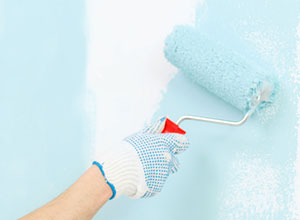
Depends On Tio2
The hiding of a paint product (except for low-gloss/sheen products, e.g.flat, satin, etc.), is dependent on two things — the amount of titanium dioxide pigment in the product and the thickness at which the product is applied. The exception for low-gloss paints is because the filler pigments used can contribute to hiding when the paint dries.
Major Color Change
When a major change in color is going to take place, from dark to light, there is a misconception that the surface should be primed before the first coat of finish is applied. The fact is that white, white base, and even some medium-tint bases have better hiding than a primer.
How To Improve Hiding Of Deep Colors
To improve the hiding of clear-base deep colors, it is helpful if they go over a tinted primer, or in the case of latex products on drywall, use the finish coat as a primer. When tinting a primer, it is advised not to exceed 4 oz. per gallon of tinting color. Latex eggshell or latex semigloss make an ideal primer for alkyd eggshell or alkyd semigloss on drywall. You can match the color exactly and reduce the number of coats required to get complete hiding.
Latex Paints
Moisture
The porosity of paints varies with the pigment/resin ratio of the product. Gloss paints have a lower pigment content than flat paints and are less permeable than flats and more of a vapor barrier. The resin used also determines the vapor characteristics. Moisture vapor transmission is rated in "perms" and some typical perm ratings are listed below: A perm rating of less than 1.0 is considered a vapor barrier.
2 mil polyethylene (medium density) 0.4
Epoxy-polyamide (gloss) 0.14
Alkyd semigloss 0.57
Latex semigloss 4.98
Alkyd flat 19.9
Latex flat 27.0
Don’t Use As A Primer...
Never use a flat latex paint as a primer under eggshell paints. Flat paints have a high pigment to resin ratio and are very porous. When an eggshell product is applied over a porous surface, some of the resin is absorbed into the flat which causes a variation in sheen (flashing) in the eggshell. Usually when the surface has been rolled, the gloss on the top of the stipple (where the paint is thicker) is higher than the bottom of the stipple, giving the surface a mottled look.
Acrylic Latex
Acrylic latex paints have better "wet adhesion" than PVA latex paints. Wet adhesion, simply stated, is the adhesion of a product to a previously painted surface when it becomes wet. Some latex paints adhere well in dry conditions, but when washed, or exposed to condensation (like in small unvented bathrooms with shower), the product washes off or can be peeled from the surface to which it was applied.
Mould growth on exterior surfaces
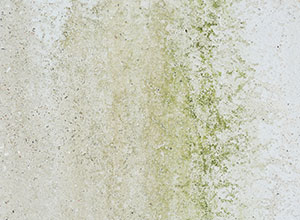
Cause
Moisture is an essential element for the growth of moulds.
Putting it right
Affected areas should be treated with Multi-Surface Fungicidal Wash. Once rinsed and allowed to dry it can be over coated with you favourite Dulux Paint product.
Touch Up
Depends On Gloss
The ability to "touch up" a painted surface is dependent on the gloss and color of the product, the length of time it has been on the surface, and whether it is alkyd or latex. Generally, flats touch up well in both alkyd and latex. Alkyd eggshell and semigloss paints lose about 25-30% of their applied gloss after 10-12 weeks. If alkyds are touched up after this loss of gloss, even from the same can, the touch ups are too glossy and take a long time (months) to catch up to the lower gloss on the surface. As a general rule, latex at all gloss levels will touch up better than an alkyd because there is much less change in gloss and colour on aging.
Affected By Temperature
The ability to "touch up" latex paint can be affected by temperature. Latex paint applied below 50°F (10°C) will have its film forming properties adversely affected. The color of the paint will likely be lighter than if it dried at 50°F (10°C) or higher. When painting in the colder months on new construction, be sure that the air, surface, and paint temperatures are all above 50°F (10°C).
Use The Same Tool
When "touching up" a paint finish, it is important to use the same application tool that was used when the surface was done originally. Brushes and rollers leave different surface textures, and if you touch up a wall that has been rolled by using a brush, the touch up will be quite apparent.
Tips 101

Dry Your Brush
If you are going to reuse a brush that has just been cleaned with water, blow it dry with a hair dryer first. Any residual water in the bristles will dilute the paint on the brush, causing it to run down the handle when painting. If the brush has just been cleaned with mineral spirits, dry the bristles as well as possible with paper towels before starting to paint, to prevent paint running down the handle. Spread the paper towel out to dry before disposing.
Getting A Cleaner Edge
If using masking tape to protect a surface (except carpet) when painting, remove the tape as soon as you can. You will get a cleaner "edge" and there is less chance the tape will bond to the surface it is protecting and become difficult to remove. Masking tape comes in many grades and qualities so talk to your paint supplier to make sure you get the right tape for the job you are doing.
Resealing The Can
After opening, and before using a new can of paint, drive about 5 or 6 holes with a nail around the rim where the lid sits. This will allow paint to drain back into the container instead of filling the rim. If the rim fills with paint, it is difficult to reseal the can.
Invest In A Good Brush & Roller
Buy a good-quality brush or roller. A cheap brush loses bristles, doesn't hold as much paint, and is harder to use when "cutting in" to another surface. Cheap rollers tend to matt and leave an uneven "stipple" on the surface.
Keep A Wet Edge
When brushing or rolling, always work from the dry surface back into the wet paint, working fast enough to keep a wet edge. If you are going to take a break, do it in a corner, never in the middle of a wall. This will help avoid lap and roller marks in the painted surface.
Use An Extension Pole
Use an extension pole on your roller handle. It allows you to use longer strokes and saves you from bending over to refill the roller with more paint. It also speeds up the job and makes it easier to maintain a wet edge — especially on a ceiling.
Painting Baseboards
Use 2-inch masking tape around the edge of the carpet when painting baseboards. Allow the tape to lay on the baseboard about 3/4" and then tuck it down over the carpet fibers as you pull them away from the baseboard. The tape will not stick firmly to the carpet fibers, so let the paint dry before removing the tape.
.jpeg)